
Trees
Clarington's Public Works Department is responsible for maintaining all municipal trees, including boulevard trees, roadside trees, those within our parks, and at facilities.
If you have any questions or concerns regarding the maintenance or conditions of municipal trees, please submit your concern through the Service Clarington portal or call 905-623-3379 ext. 2661.


Durham Trees Program
The Region of Durham has partnered with local Conservation Authorities to create the Durham Trees program to subsidize tree-planting for private landowners who want to plant at least two acres of land with a minimum of 500 native trees. The program's goal is to increase forest cover region-wide by at least 30 per cent over the next five years to help mitigate climate change. Residents can use the online mapping tool to identify their Conservation Authority and contact their Tree Planting Expert.
Learn more about Durham Trees.

Backyard Tree Planting Program
Local Enhancement and Appreciation of Forests (LEAF) is a not-for-profit organization that helps property owners plant subsidized trees and shrubs on their property to help provide essential habitat for songbirds, native bees and butterflies.
The program includes a consultation with a certified arborist, assistance with selecting a suitable native tree, tree-planting service or tree delivery, and resources to help care for newly planted trees.
Get started with LEAF today.
Spongy moths
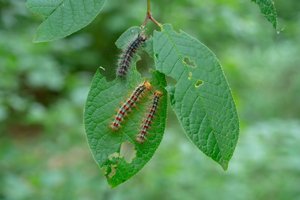
Spongy moths, formerly known as gypsy moths, are non-native defoliating insects that feed on broadleaf tree species, including oak, birch, maple, poplar, and willow. Outbreaks typically occur every seven to 10 years and last three to five years. Data collected by the Ministry of Northern Development, Mines, Natural Resources and Forestry indicates that 2022 may be another year with widespread Spongy moths in our area.
Learn what measures you can take to help control Spongy moths on your property.
Resources
- Lifecycle of the Spongy moth (Government of Ontario)
- Map of projected 2022 Spongy moth defoliation (Government of Ontario)
- Frequently asked questions (Ontario’s Invading Species Awareness Program)
- Spongy Moth Fact Sheet (Ontario’s Invading Species Awareness Program)


