
Protect your home and family with CO safety tips from Clarington Emergency and Fire Services
November 1 to 7 is Carbon Monoxide (CO) Awareness Week and Clarington Emergency and Fire Services is reminding residents to stay safe with CO safety tips.
What is Carbon Monoxide?
Carbon monoxide is known as the silent killer because it is colourless, odourless, tasteless. A carbon monoxide alarm will alert you to the presence of this dangerous gas. CO is produced when fuels do not burn completely inside their fuel-burning appliances. Exposure to carbon monoxide can cause headaches, nausea, dizziness, confusion, drowsiness, loss of consciousness, or even death.
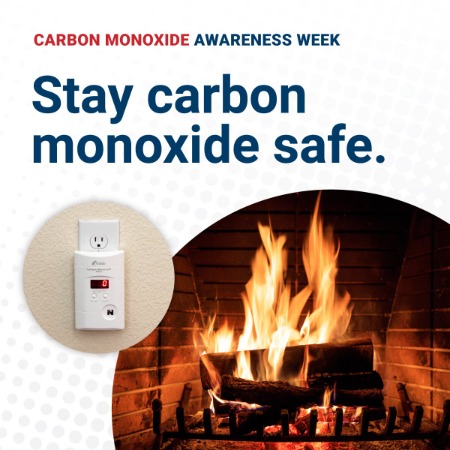
Install carbon monoxide alarms – It’s the law
If your home has a fuel-burning appliance, a fireplace, or an attached parking garage, you must have a working carbon monoxide alarm outside each sleeping area.
Fuel-burning appliances are designed to burn fuels such as propane, natural gas, gasoline, heating oils and solid-fuel (wood). Some examples of fuel-burning appliances include stoves, furnaces, hot water heaters, gas or wood fireplaces.
Fuel-burning appliances designed for outside use, should not be operated indoors or inside garages. Some examples of those devices are fuel-burning portable heaters, generators, gas or charcoal barbecues.
If you live in an apartment or condo unit with a fuel-burning appliance, a carbon monoxide alarm must be installed adjacent to each sleeping area. A carbon monoxide alarm must also be installed adjacent to sleeping rooms if:
- Your residential building has a service room
- If the residential unit shares a common wall, floor or ceiling with the service room
- If there is a parking garage and the residential unit shares a common wall, floor or ceiling with the parking garage
During Carbon Monoxide Awareness Week, take time to check that you have the required carbon monoxide alarms installed adjacent to the sleeping rooms and that they are working properly. We recommend installing carbon monoxide alarms on every level of your home.
- Test your CO alarm by pressing the test button. This should be done every month.
- Check the batteries. Batteries need to be replaced every year.
- Get familiar with your device and read the manufactures instructions to know the difference between the low-battery warning, the “end-of-life" warning and the alarm alerting you to the presence of CO in your home.
- Check the expiration date of the alarm. They need to be replaced according to the manufacturer’s instructions. Some device expiration dates vary between five to 10 years.
If your CO alarm sounds you or other occupants may experience symptoms of CO poisoning. It is critical to get everyone out of the home immediately and call 9-1-1 from outside your home.
To learn more fire safety tips, visit www.clarington.net/FireSafety. Visit www.clarington.net/EFS for more information about Clarington Emergency and Fire Services.
Contact Us
Address: 40 Temperance Street, Bowmanville, ON L1C 3A6
Phone: 905-623-3379
TTY: 1-844-790-1599


