
Knowing what to plan for and expect is key in an emergency. Across Canada, we face a number of hazards, such as earthquakes, blizzards and tornadoes. In addition to natural disasters, there are other types of risks, such as power outages and industrial or transportation accidents. Find out the risks that are most likely to occur in your community by visiting the GetPrepared.ca website.
Emergency Preparedness
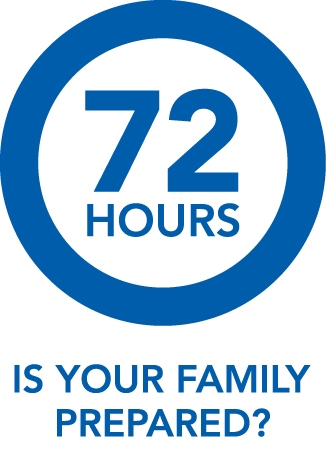
Preparing for an emergency is something all residents should do. By taking a few simple steps today, you can become better prepared to face a range of emergencies and look after your family anytime and anywhere. Remember, emergencies can happen at any time, day or night and in any season.
72 Hours: Is your family prepared?
If an emergency happens in your community, it may take emergency response workers some time to get to you. You should be prepared to take care of yourself and your family for a minimum of 72 hours.
- Learn more about 72 Hours: Is Your Family Prepared?
Every household needs an emergency plan. It will help you and your family know what to do in case of an emergency.
Your family may not be together when an emergency occurs. Plan how to meet or contact one another, and discuss what you would do in different situations.
It only takes 20 minutes to complete a personalized plan online.
To fill out your home emergency plan, you will need to think about the following:
- Safe exits from your home and neighbourhood
- Meeting places to reunite with family or roommates
- Choosing a designated person to pick up your children should you be unavailable
- Contact persons, both close-by and out-of-town
- Special health needs
- Place for your pet to stay
- Risks in your region
- Location of your fire extinguisher, water valve, electrical box, gas valve and floor drain
Keep this document in an easy-to-find, easy-to-remember place (for example, with your emergency kit). Photocopy your plan and keep it in your car or at work.
In an emergency, you will need some basic supplies. You may need to get by without power or tap water. Be prepared to be self-sufficient for at least 72 hours. Make sure your kit is easy to carry and everyone in the household knows where it is. Keep it in a backpack, duffle bag or suitcase with wheels, and keep it in an easy-to-reach place, such as your front hall closet.
Basic emergency kit
- Water - at least two litres of water per person per day. Include small bottles that can be carried easily in case of an evacuation order.
- Food that won't spoil, such as canned food, energy bars and dried foods. Replace food and water once a year.
- Manual can opener
- Wind-up or battery-powered flashlight (and extra batteries) Wind-up or battery-powered radio (and extra batteries)
- First aid kit
- Spare keys to your car and house
- Some cash in smaller bills, such as $10 bills
- A copy of your emergency plan and contact information
- Special items such as prescription medication, infant formula, equipment for people with disabilities or food, water and medication for your pets or service animal
Recommended additional items
- Two additional litres of water per person per day for cooking and cleaning
- Candles and matches or lighter (place candles in sturdy containers and do not burn unattended)
- Change of clothing and footwear for each household member
- Sleeping bag or warm blanket for each household member
- Toiletries
- Hand sanitizer
- Utensils
- Garbage bags
- Toilet paper
- Household chlorine bleach or water purifying tablets
- Basic tools (hammer, pliers, wrench, screwdrivers, work gloves, dust mask, pocket knife)
- Small fuel operated stove and fuel (follow manufacturer's directions and store properly)
- A whistle (in case you need to attract attention)
- Duct tape (to tape up windows, doors, air vents, etc.)
Check your kit once a year to ensure contents are up to date. Re-stock as needed.
For more information, visit the GetPrepared.ca website.
Nuclear preparedness
If you live, work, or go to school within 10 kilometres of the Darlington Nuclear Generating Station, you should be prepared in the unlikely event of a nuclear emergency. In Clarington, the Regional Municipality of Durham is responsible for testing the public alerting system, which consists of outdoor sirens and automated mass telephone notifications.
- Nuclear preparedness (Region of Durham)
- Nuclear awareness (Region of Durham)
- Potassium iodide (KI) tablets (Region of Durham)
Waterfront and flood emergency planning
- Clarington Emergency Flood Response Plan (PDF)
- Clarington Flooding Preparedness Guide (PDF)
- Reduce your risk of basement flooding (PDF)
- Water and Electricity Don't Mix (Electrical Safety Authority) (PDF)
- Preparing for a flood (Government of Canada)
- Flood preparedness tips (Government of Ontario)
- Flood Forecasting and Warning Program (Government of Ontario)
- Environment Canada watches and warnings
Emergency plan
Municipalities are required to develop and implement emergency management programs consisting of emergency plans, training programs, exercises, public education materials and much more.
Your emergency plan
Do you have an emergency plan? It will take you about 20 minutes to make a family emergency plan online.
Clarington's Emergency Plan
Our Emergency Plan is comprehensive and outlines who makes decisions in an emergency, the areas of responsibility (e.g. roads, facilities, coordination, etc.) and how to communicate with the community.
Region of Durham's Emergency Plan
- Learn more about the Region of Durham's Emergency Planning
- For details on nuclear safety, visit the Region of Durham's website.
- To order KI tablets for your family, visit www.preparetobesafe.ca or call the Durham Region Health Department at 905-723-3818 or 1-888-777-9613. KI tablets can also be found at these locations in Clarington:
- Global Drug Mart Remedy's Rx, 130 Waverley Road, Bowmanville
- Courtice Pharmasave, 2727 Courtice Road, Courtice
Province of Ontario's Emergency Plan
- Learn more about the Province of Ontario's Emergency Planning
Contact Us
Address: 40 Temperance Street, Bowmanville, ON L1C 3A6
Phone: 905-623-3379
TTY: 1-844-790-1599


